The Sacred Act
In Appalachia, we’ve always been told that our history is something that happens to us—usually by someone holding a pen who doesn’t live in our hollows. But for those of us who have spent our lives "making a way out of no way," we know better. We know that our stories aren't just artifacts; they are our infrastructure.
As an archivist, I often get asked why I spend so much time obsessed with the "old stuff." People see a dusty ledger or a fading photograph and see a relic. I see a blueprint.
Chronicling is not just about looking backward; it is an act of self-determination.
The Archive as "Home Place"
Lately, I’ve been thinking a lot about microshifting. It’s that uniquely Appalachian trait of balancing the deeply cerebral—the research, the taxonomy, the digital preservation—with the physical tending of the home place.
Chronicling our history requires that same balance. It’s not enough to just "save" a document. We have to understand the place it came from. When we chronicle the stories of Central Appalachia, we are honoring our roots and our families while maintaining a standard of professional excellence that the rest of the world is finally starting to notice.
"Small Stories" Matter Most
In the academic world, we talk a lot about "belongingness" and student persistence. But where does that sense of belonging start? It starts when a person sees themselves reflected in the record of their community.
When we fail to chronicle our own lives—our businesses, our kitchen-table organizing, our small victories—we allow a "no way" narrative to take hold. But when we document the work:
We count the impact, not just the hours.
We tie ourselves to the work that matters.
We provide the evidence that we have always been here, innovating and leading.
The Goal is the Legacy
At Curio Archival, the mission isn't just about filing papers. It’s about the "productivity of purpose." We don't just want to be tied to a screen; we want to be tied to the heritage that sustains us.
Every time we save a letter from a grandfather, a business plan from a local entrepreneur, or a photo of a community gathering, we are building a bridge for the next generation. We are giving them a "way" that was made out of "no way" by the people who came before them.
There is much to do. Our archives are waiting, and our heritage is calling. Let's get to work.
#Appalachia #CurioArchival #Leadership #Heritage #CentralAppalachia #ArchivalManagement #WorkSmarter
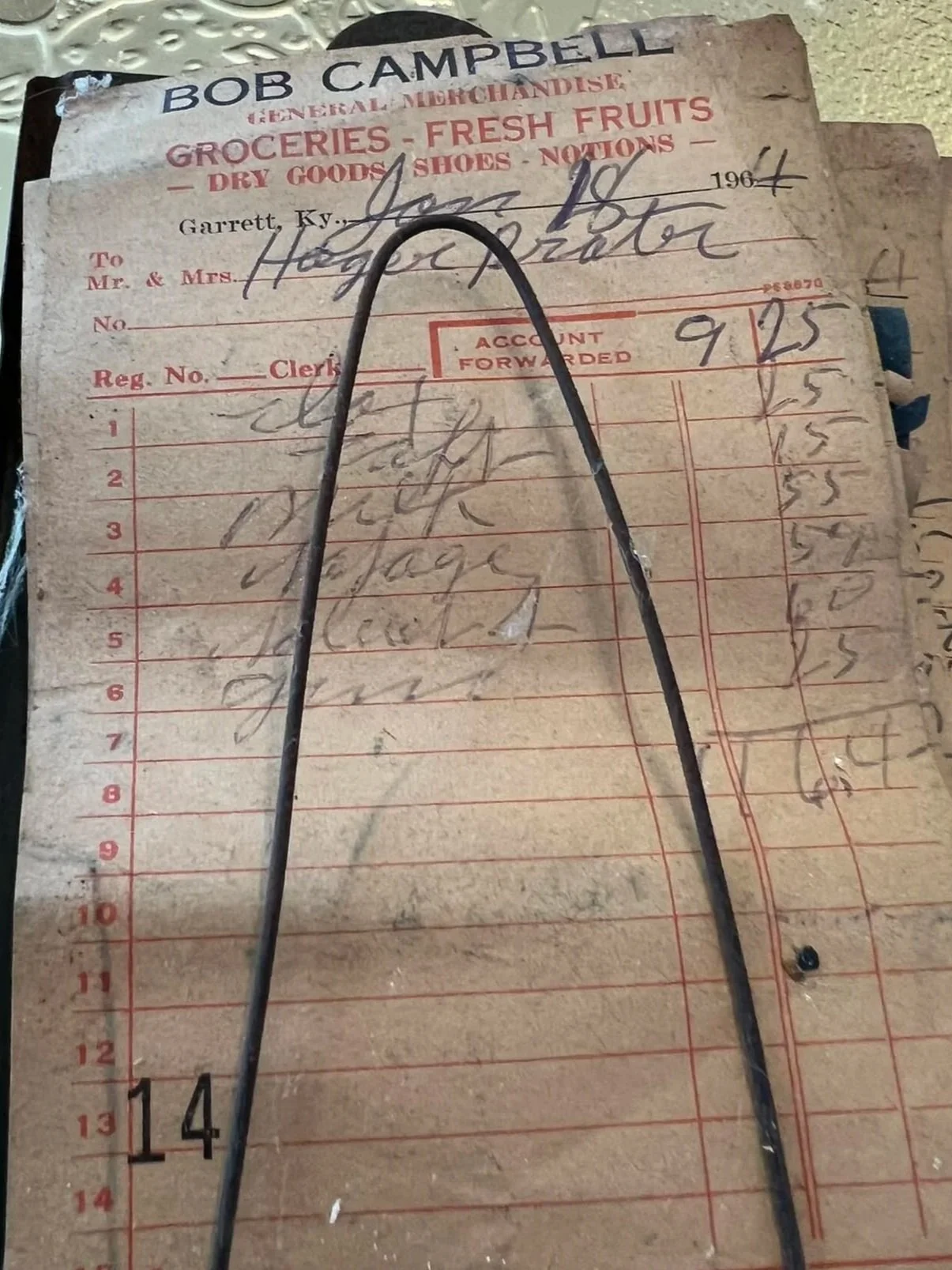
Campbell’s Grocery Store, Garrett, KY, 1964. Accounts ledger